Mieke SmithSenior Writer

The pace of change within AI is astonishing – every week seems to bring a new breakthrough or announcement. It’s incredible to think that ChatGPT, which now dominates headlines, was only released widely in 2022.
Alongside these advancements, a growing list of terms is emerging, each aiming to define a specific part of the AI puzzle.
At Speechmatics, we frequently encounter terms like Conversational AI, Speech AI, Voice AI, AI Agents, and Generative AI used interchangeably.
But what exactly sets these apart?
Here, we’ll break down each concept, clarify their unique roles, and show how Flow is transforming the future of human-like interactions at the enterprise level.
An easy way to think about AI agents is like a computer programme that can be set a goal, and then go away and try and achieve that goal on its own, without you having to instruct it every step of the way.
It learns as it goes, and therefore in principle should be better and smarter over time.
These are primarily used by businesses – an example might be a bot that routes customer emails to the best internal customer support agent based on the content of its email. If it doesn’t reach the right person and they forward it on to a different department, this feedback would be remembered by the bot for future emails.
Though mostly used by businesses, they can also be used by individuals.
Imagine a dinner party where you've tasked an assistant to handle RSVPs, book travel for your guests, and even arrange childcare for those with children that want to come along. All of this could potentially be handled automatically without your input, and you RSVP bot could learn information for future dinner parties to make this even smoother for your guests.
Now, let’s delve into the heart of human-machine interaction – Conversational AI.
This technology enables machines to understand and respond to human language in a way that feels natural and intuitive.
Conversational AI powers chatbots and virtual assistants, allowing them to engage in text-based exchanges that feel natural, interpreting user input to generate relevant responses. In our dinner party scenario, Conversational AI is like a helpful host who can keep track of requests through written notes. For example, if you type, “I’d like to have a vegan meal with a Korean twist” it could suggest recipes that work with your party’s theme and request, acting very much like a friend who understands exactly what you’re looking for based solely on your text cues.
Next, we have Generative AI – the creative force of artificial intelligence.
Generative AI isn’t just regurgitating existing information; it’s creating new content based on learned patterns.
Most people will have now used this type of AI via ChatGPT, or to create new images and videos based on prompts. This technology is interesting because it doesn’t just optimise something existing, it creates new information and content.
Say you wanted to serve a wow-factor cocktail at this dinner party you’re having. Generative AI could create a unique margarita based on the theme, rather than relying solely on existing, traditional recipes. It’s like having a mixologist who understands the assignment and vibe and comes up with something distinct for the moment. Generative AI could even come up with a new name for this cocktail.
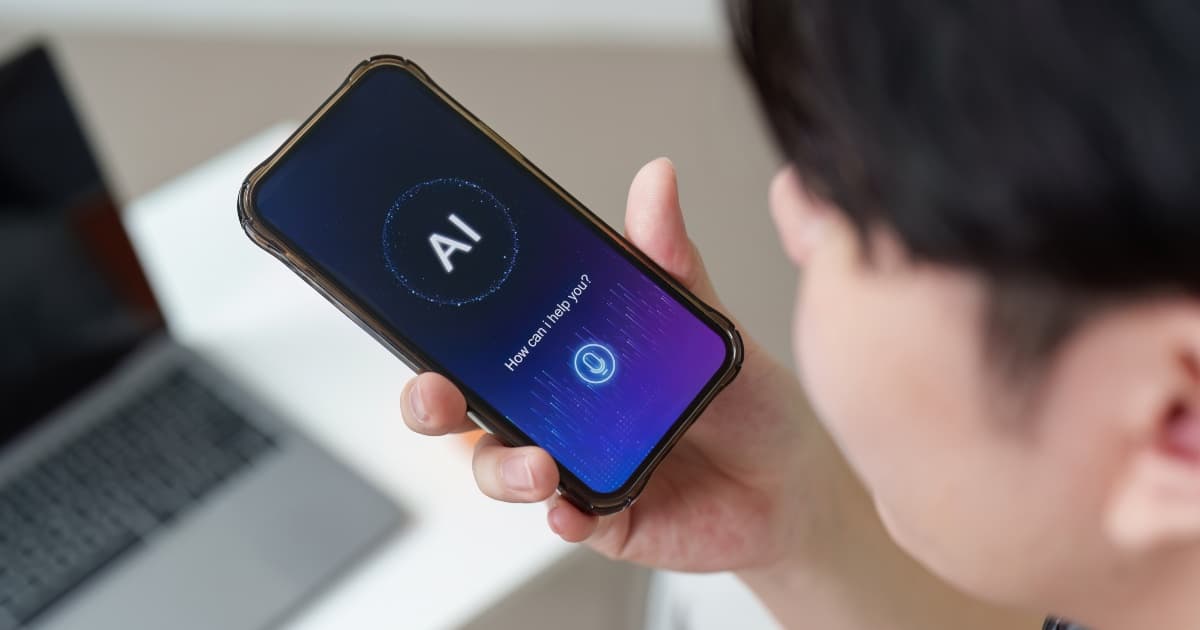
On top of all this, you can add voice capabilities with Voice AI, which enables voice-based interactions, enhancing accessibility and user experience.
Voice AI can be combined with other AI technologies, allowing it to work seamlessly in everything from smart homes to Internet of Things (IoT) applications.
Revisiting the dinner party setting, imagine preferring to speak commands rather than type them. With Voice AI, your digital assistant “hears” and processes your spoken commands, making it an intuitive, hands-free interaction. You might say, “Please preheat the oven to 180 degrees Celsius,” and your assistant responds without missing a beat, even asking clarifying questions if needed. This integration makes interactions with technology feel even more human.
At Speechmatics, we believe combining voice interactions with other forms of AI will eventually lead to speech joining the mouse, keyboard and touchscreen as a primary way to use technology.
Not only literally ‘hands-free’, this makes technology more accessible and intuitive to use.
In many modern applications, these AI technologies intersect to create seamless user experiences. For example, a virtual assistant might use:
AI Agents to perform tasks autonomously
Generative AI to create new content based on prompts
Conversational AI to interact it natural language and generate easy to understand responses
Voice & Speech AI to allow you to use your voice in conjunction with all of the above
It's like assembling a dream team where each player brings a unique skill to achieve a common goal - making technology interact with us in ways that feel genuinely human.
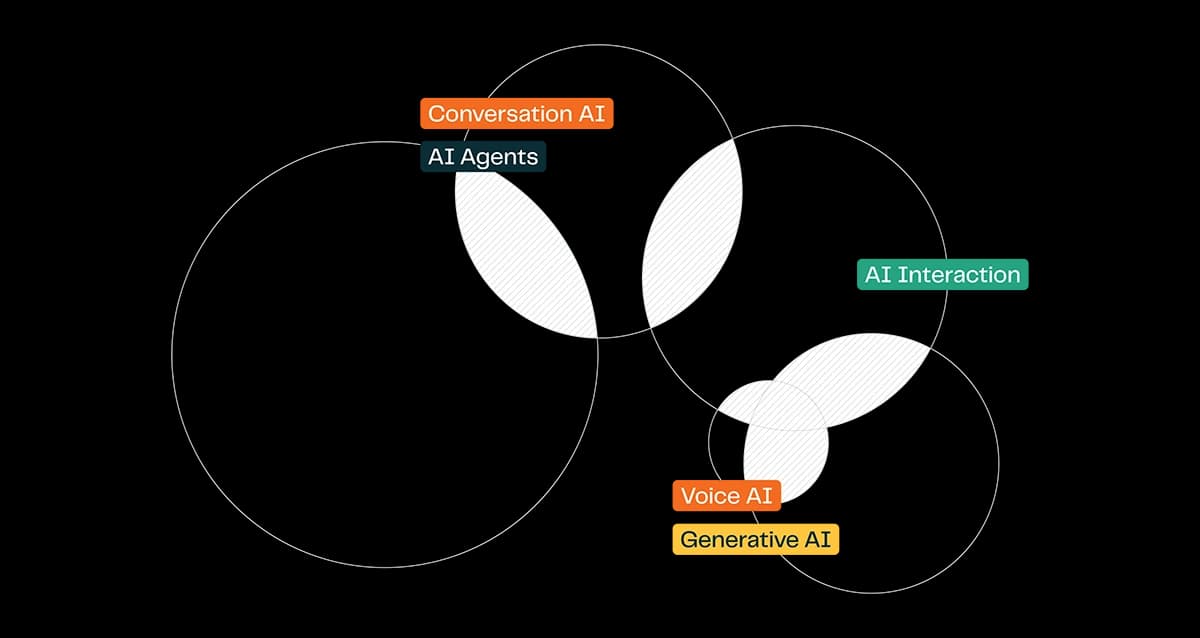
Your dinner party assistant, equipped with all these AI technologies, becomes a versatile helper. You can speak to it naturally, and it understands your requests, asks clarifying questions, performs tasks autonomously, and even adds creative touches to its work. It's like having a personal chef who not only follows recipes but also understands your preferences and adds artistic flair to your meals.
When thinking about the many terms in the Voice AI world, it can helpful to keep their differences in mind.
AI Agents: Autonomous entities that perform tasks and make decisions with little human input
Generative AI: Creates new content based on learned data patterns, adding creativity to AI capabilities
Conversational AI: Enables natural, human-like text interactions through understanding and generating language
Voice & Speech AI: Allows for spoken interactions between machine and human, using a combination of speech-to-text and text-to-speech

At Speechmatics, we’ve spent over a decade advancing speech recognition technology.
With Flow, we’re taking a leap forward in Conversational AI, offering businesses the tools to build seamless, voice-enabled interactions.
Flow is designed not only for speed and accuracy but also for creating inclusive, responsive experiences. Whether you're in a buzzy café or a busy office, Flow can manage overlapping voices and background noise with ease, making interactions feel as smooth as chatting with a friend or colleague.
If this is your first foray into Voice AI, there’s no better way to explore it than with Flow. You can experience Flow directly on our website – no sign-up required – and see how sentiment-aware AI can improve interactions, whether you’re using our iOS app on the go or building context-driven solutions with our API.


![[alt: Healthcare is a strain image]](/_next/image?url=https%3A%2F%2Fimages.ctfassets.net%2Fyze1aysi0225%2F4YLB294PotEnVZFTtksUt8%2F0f9e81fbe24027f52d1941713e032217%2Fmedical_blog_header_general_01.webp&w=3840&q=75)