SpeechmaticsEditorial team

For decades, interactive voice response (IVR) systems have been the front door to customer service. They answer calls, route customers to the right department, and automate routine tasks without requiring a human agent.
That model still works for many organizations.
At the same time, advances in speech recognition and large language models have introduced a different approach. AI voice agents can understand natural speech, hold conversations, and resolve increasingly complex requests without relying on rigid menu structures.
The question for many businesses is no longer whether voice automation has value. It's which type of system best fits their customers and operations.
A traditional IVR system guides callers through a predefined set of options.
Customers interact using their telephone keypad or, in some cases, simple voice commands. A typical call might begin with prompts such as "Press 1 for sales" or "Press 2 for support" before routing the caller to the appropriate destination.
These systems are built around decision trees. Every possible path must be defined in advance, making them reliable for structured tasks with predictable outcomes.
Banks, healthcare providers, utilities, and government organizations have relied on IVR technology for years because it can efficiently handle high call volumes while reducing pressure on contact center staff.
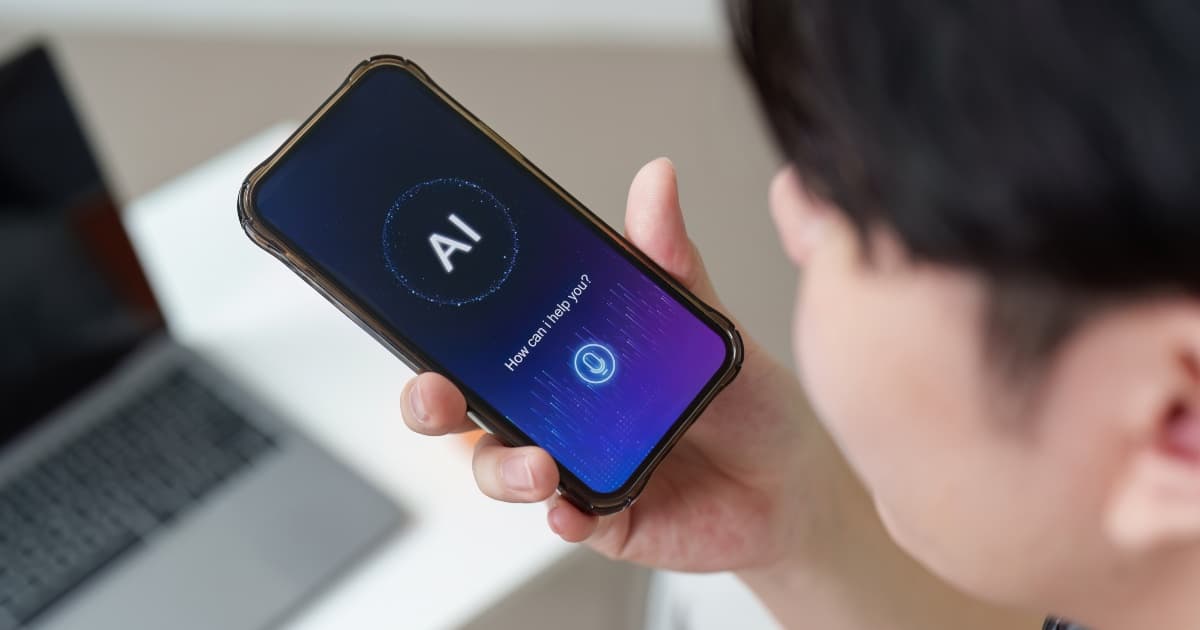
AI voice agents replace fixed menu structures with natural conversation.
Instead of navigating numbered options, callers simply explain what they need. Speech recognition converts spoken language into text, language models interpret the request, and text-to-speech generates a spoken response.
Rather than following a predefined script, the system responds dynamically based on the conversation.
This allows AI voice agents to answer questions, collect information, complete transactions, and resolve many customer requests without requiring callers to navigate complex menus.
The distinction between traditional IVR and AI voice agents isn't simply the technology behind them. It's how people interact with them.
Traditional IVR systems expect callers to adapt to the system. Users listen to prompts, choose from available options, and follow a predetermined path.
AI voice agents adapt to the caller instead.
Someone might say, "I need to change tomorrow's appointment," or "I haven't received my invoice." The system identifies the intent and continues the conversation without forcing the caller through multiple layers of menu options.
That flexibility creates a more natural experience, particularly when customer requests don't fit neatly into predefined categories.
Traditional IVR systems work well when customers know exactly which option they need.
Problems arise when menus become too long or when callers aren't sure how their request has been categorized. Navigating several layers of prompts before reaching the right destination can become frustrating, particularly for more complex enquiries.
AI voice agents reduce that friction by allowing callers to explain their request in their own words. Instead of navigating menus, customers have a conversation.
The result is often a faster and more intuitive experience, provided the underlying speech recognition and language understanding perform reliably.

Traditional IVR systems are designed for structured workflows.
Checking an account balance, confirming an appointment, or routing a caller to the correct department all fit comfortably within a rules-based system.
Unexpected requests are more difficult to manage because every possible interaction must be anticipated during development.
AI voice agents are better suited to conversations that vary from one customer to another. They can ask follow-up questions, gather missing information, and adapt their responses as the conversation develops.
That makes them particularly useful for customer support, appointment scheduling, insurance enquiries, healthcare administration, and other scenarios where interactions aren't always predictable.
Updating a traditional IVR system often requires modifying call flows, recording new prompts, and testing multiple decision paths.
As systems grow, maintaining those flows can become increasingly complex.
AI voice agents shift much of that complexity away from static decision trees. Businesses still need to define policies, integrations, and escalation rules, but expanding the range of supported conversations is often more straightforward than redesigning an entire menu structure.
Deployment can also be adapted to different infrastructure and security requirements. On-device speech recognition allows voice processing to happen locally, reducing reliance on cloud connectivity and helping organizations keep sensitive audio within their own environment.
This flexibility makes it easier to evolve customer service experiences over time.
One of the biggest differences between menu-based IVR and conversational systems is the importance of speech recognition.
A traditional IVR that relies primarily on keypad input has limited dependence on speech technology.
AI voice agents depend on it.
If the speech recognition system misinterprets what a caller says, every downstream component receives incorrect information. That affects language models, business logic, and ultimately the customer's experience.
For this reason, organizations building conversational systems should evaluate speech recognition carefully, paying particular attention to transcription accuracy, latency, accent recognition, and performance across real-world audio conditions.
Traditional IVR hasn't become obsolete.
Many organizations continue to use it successfully for high-volume, repetitive interactions where the possible outcomes are limited and well defined.
Simple routing, payment processing, appointment confirmations, and account verification can all be handled efficiently using conventional IVR technology.
For these workflows, the additional flexibility of conversational AI may not justify the added complexity.
AI voice agents become more valuable as conversations become less predictable.
Organizations that handle diverse customer enquiries often benefit from systems that can understand natural language instead of relying on predefined options.
Contact centers, healthcare providers, financial services organizations, retailers, and travel companies are increasingly using conversational AI to automate routine enquiries while allowing human agents to focus on more complex interactions.
These systems can also provide a consistent experience across multiple languages and support customers around the clock. Speech-enabled IVR systems combine AI-powered speech recognition with intelligent call routing to create more seamless voice experiences for both customers and support teams.
Traditional IVR and AI voice agents solve many of the same business problems, but they do so in fundamentally different ways.
Menu-driven IVR remains a practical solution for structured workflows with predictable customer journeys. AI voice agents offer greater flexibility, allowing customers to speak naturally while supporting more complex conversations.
For many organizations, the future isn't a complete replacement of one technology with the other. Existing IVR systems increasingly serve as the foundation for more conversational experiences, combining established call routing with advances in speech recognition and generative AI.
If you're evaluating conversational AI voice agents, choosing a platform with accurate, low-latency speech recognition provides the foundation for faster, more natural customer interactions at enterprise scale. Explore Speechmatics' speech recognition technology for AI voice agents and discover how it can help you build more responsive, natural voice experiences.


![[alt: Healthcare is a strain image]](/_next/image?url=https%3A%2F%2Fimages.ctfassets.net%2Fyze1aysi0225%2F4YLB294PotEnVZFTtksUt8%2F0f9e81fbe24027f52d1941713e032217%2Fmedical_blog_header_general_01.webp&w=3840&q=75)