SpeechmaticsEditorial Team
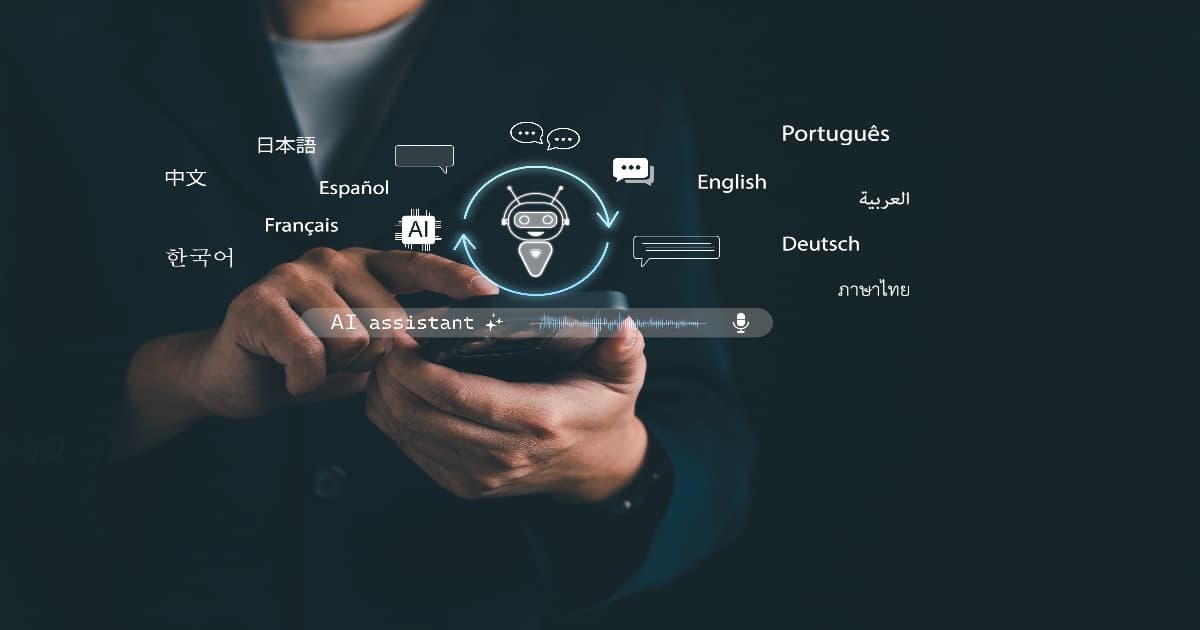
Multilingual speech recognition is becoming a core requirement for global platforms. It is no longer enough for a speech system to perform well in one language, in one region, under ideal audio conditions. Global products need speech technology that can work across markets, across accents, and across different customer and operational environments without forcing teams to stitch together multiple systems.
That shift matters because voice is now used in more places than ever. Customer support, meetings, media workflows, healthcare, compliance, accessibility, voice interfaces, and AI agents all depend on speech data. If a platform operates internationally, multilingual speech recognition moves from a useful feature to a critical infrastructure decision.
At a basic level, multilingual speech recognition means converting spoken language into text across more than one language. In practice, global platforms usually need much more than that.
They often need to handle:
Multiple supported languages across regions
Different accents within the same language
Mixed-language user bases
Domain-specific vocabulary
Real-time and batch transcription use cases
Secure deployment for enterprise or regulated environments
This is why evaluating multilingual speech recognition is not only about asking how many languages a provider supports. It is about asking how well the system works when language diversity becomes part of the product itself.
As platforms grow internationally, the pressure on speech systems changes.
A product that worked well for one English-speaking market may struggle once it expands into:
Customer support across Europe, Asia, and Latin America
Internal collaboration across multilingual teams
Media transcription across regional content libraries
Voice AI tools used in international enterprise environments
The more global the platform becomes, the less sustainable it is to rely on fragmented speech tooling. Multiple vendors, language-specific systems, and inconsistent security models create operational drag. Global teams increasingly want one platform that can support multilingual speech consistently.
One of the first things buyers look at is language coverage. That is reasonable, but it should not be the only measure.
A provider may support many languages on paper, but the real question is whether those languages are production-ready for your use cases.
For example, a global platform should look beyond headline coverage and ask:
How well does the system perform in each target language?
Does it handle regional accents and speech variation?
Is punctuation and formatting strong enough for the workflow?
Is support consistent across real-time and batch use?
Are enterprise deployment options available across the full language set?
Speechmatics is relevant here because it positions its platform around multilingual speech-to-text at scale and supports 56+ languages. For global platforms, that kind of breadth matters because it can reduce the need to combine multiple tools just to cover international demand.
Multilingual does not only mean different languages. It also means variation within the same language.
A global English-language platform may still need to perform well across:
UK English
US English
Indian English
Australian English
Regional accents within each of those markets
The same principle applies across other languages. Accent handling is one of the biggest reasons global transcription quality can break down, even when the platform technically “supports” the language.
This is why real testing should include representative speech from the actual markets you serve, not just standard demo audio.
Global platforms often need speech recognition in more than one form.
These often include:
Live captions
Contact centre agent support
Voice interfaces
Real-time meeting transcription
Accessibility features
In these workflows, latency matters a lot. Text must appear fast enough to remain useful while the speaker is still talking.
These often include:
Recorded meeting archives
Media library transcription
Compliance review
Long-form audio indexing
Customer interaction analysis
In these workflows, throughput, structure, and downstream analytics may matter more than live response speed.
The strongest multilingual platforms usually support both, but teams should be clear about which workflow matters most to them.

When speech recognition is used live, latency becomes a product issue.
If the transcript arrives too slowly, the experience starts to fail. This is especially important for:
Live captions in multilingual events
Real-time support tools in customer service
Meeting transcription across distributed teams
AI voice interfaces that depend on fast feedback
Speechmatics places particular emphasis on low-latency speech recognition, which is relevant because global platforms often need live transcription to feel responsive across different languages, not only in English.
Multilingual voice data creates technical complexity, but it also creates governance complexity.
A global platform may need to process audio from:
Different legal jurisdictions
Regulated customer interactions
Internal enterprise discussions
Sensitive financial, legal, or healthcare settings
That means speech recognition cannot be evaluated only on performance. Buyers also need to ask:
Where is audio processed?
Is data logged or retained?
Can the platform be deployed in a controlled environment?
Does the provider support on-prem, private cloud, or on-device use if needed?
What security certifications and privacy standards are in place?
This is where enterprise-grade deployment flexibility matters. Speechmatics supports cloud, on-prem, and on-device deployment options and highlights no data logging as a core privacy principle. For global platforms handling sensitive multilingual voice data, that level of control can be a major differentiator.
Many international organisations end up using different speech tools in different parts of the business. One may support live captions, another may handle contact centre audio, and a third may cover transcription in an extra language.
That kind of fragmentation creates problems such as:
Inconsistent transcript quality
Different security models across regions
More integration overhead
More vendor management
More difficulty building shared analytics or AI workflows
A multilingual speech platform is often most valuable when it reduces that complexity. One consistent infrastructure layer can make downstream product development much easier.
For global platforms, accessibility is not only a compliance issue. It is also a product quality issue.
Speech recognition can support accessibility by enabling:
Live captions in multiple languages
Better meeting inclusion for international teams
More usable video and media archives
Stronger support for deaf and hard-of-hearing users
More flexible access to spoken content across markets
The broader the language support, the more accessible the platform becomes to global users rather than only a core market.
Multilingual speech recognition is especially important in global contact centre environments.
Teams may need to transcribe:
Customer calls across different markets
Agent-customer interactions in different languages
Compliance scripts in region-specific workflows
Escalation events and quality issues at scale
In this setting, the best platform is not only the one with strong accuracy. It is the one that can combine multilingual support, low latency, security, and deployment flexibility in one environment.
As global teams become more distributed, multilingual speech recognition has become more useful in internal collaboration too.
Use cases include:
Meeting transcripts for international teams
Searchable records of cross-border discussions
Better inclusion for participants working in second languages
Multilingual live note capture
Support for global project coordination
This is one of the clearest examples of speech recognition moving from specialist tool to platform layer.
A multilingual speech system should always be tested with real audio from the people who will actually use it.
That means testing should include:
Real accents from target regions
Real meeting or support call conditions
Domain-specific language
Mixed recording quality
Different microphone types
Real concurrency expectations
Testing only polished demo audio often gives a false sense of readiness.
A good multilingual speech recognition evaluation should include:
Supported languages and dialects
Accent robustness
Real-time latency
Batch throughput
Security and privacy controls
Deployment flexibility
Integration options
Support for future AI workflows
This is where providers such as Speechmatics stand out for enterprise buyers. The platform combines multilingual coverage, streaming performance, and secure deployment options in a way that supports not only transcription, but also wider voice AI infrastructure.
For many global platforms, speech recognition is no longer the end product. It is the input layer for other systems.
Once spoken audio becomes accurate multilingual text, teams can build:
Search and discovery tools
Summaries
Compliance alerts
Customer analytics
Meeting intelligence
Voice-driven automation
AI agent workflows
That means the speech recognition decision affects much more than one feature. It shapes what the rest of the platform can do.
Multilingual speech recognition is becoming essential for global platforms because voice data is now part of how businesses serve customers, support employees, deliver content, and build AI-powered products.
The best solution is not only the one with the biggest language list. It is the one that combines strong language coverage, low latency, secure deployment, and the ability to work reliably across real-world international conditions.
For global platforms, the speech layer needs to be trusted infrastructure. Once that foundation is strong, everything built on top of it becomes much easier to scale.


![[alt: Healthcare is a strain image]](/_next/image?url=https%3A%2F%2Fimages.ctfassets.net%2Fyze1aysi0225%2F4YLB294PotEnVZFTtksUt8%2F0f9e81fbe24027f52d1941713e032217%2Fmedical_blog_header_general_01.webp&w=3840&q=75)